Key Takeaway
Digital dentistry refers to the use of computer-aided technologies — including digital X-rays, intraoral cameras, 3D scanning, and CAD/CAM milling — in diagnosis and treatment. For patients, these tools often mean faster results, more precise restorations, and clearer visual explanations of their oral health.
What Digital Dentistry Actually Means at the Patient Level
"Digital dentistry" is a broad term covering multiple technologies that have gradually replaced older analog processes in dental practice. The common thread is that data is captured, processed, or manufactured digitally rather than through traditional impressions, analog X-rays, or manual fabrication.
For patients, this shows up as: a camera wand scanning your teeth instead of biting into putty, X-ray sensors instead of film, and in some practices, watching a crown be designed and milled in the same appointment. Not every practice uses every digital tool, and adoption varies widely — from fully digital offices to practices that have integrated only select technologies.
The Technologies Patients Are Most Likely to Encounter
Digital X-Rays (Digital Radiography)
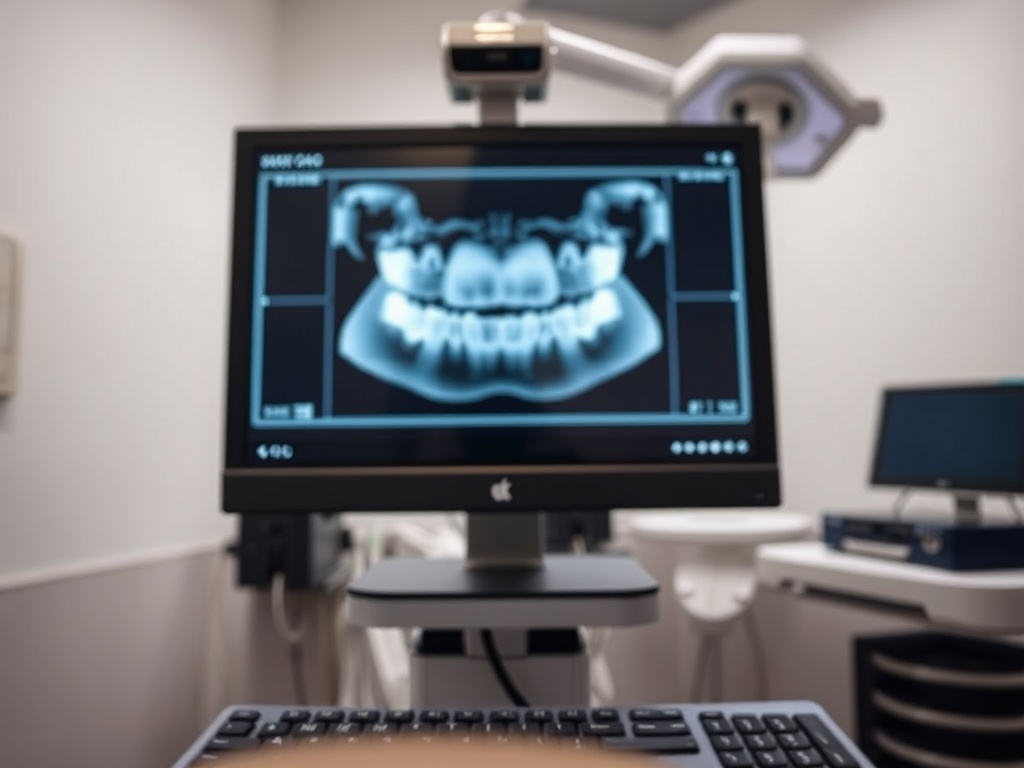
Digital X-rays use electronic sensors rather than film. The practical differences for patients: faster imaging (results appear on screen within seconds), lower radiation exposure compared to older film X-rays, and images that can be immediately shared or enlarged for case discussion. The ADA's guidelines on dental radiographic examinations explain how digital systems reduce radiation dose compared to traditional film while supporting more precise diagnostic capability.
Intraoral Cameras
An intraoral camera is a small wand with a camera tip that captures high-resolution images of the inside of the mouth. It allows the dentist to show patients — on a chairside monitor — exactly what they're seeing: a crack, early decay, inflamed gum tissue, or a worn filling. This changes the patient experience from "the dentist told me there's a problem" to "I can see the problem myself." For many patients, this visual confirmation reduces treatment hesitation.
Digital Impressions and Intraoral Scanning
Traditional dental impressions use a tray filled with putty-like material that patients bite into and hold for several minutes. Digital impressions replace this with a handheld scanner that creates a 3D digital model of the teeth. The scan takes a few minutes, involves no material in the mouth, and produces an accurate model that can be used for crowns, aligners, night guards, and other appliances.
The 3D scan is the same data that aligner companies use in treatment planning, which is relevant context for patients comparing aligner options — covered in Direct-to-Consumer Aligners vs In-Office Orthodontics: What's the Risk Gap?.
CAD/CAM Technology (Same-Day Crowns)
Computer-aided design and computer-aided manufacturing allows some dental offices to design and mill a ceramic crown in the office — a process that previously required sending impressions to an off-site dental lab and waiting 1–2 weeks. With in-office milling, a crown can sometimes be designed, fabricated, and placed in a single appointment.
The tradeoff: same-day crowns are appropriate for some cases but not all. Complex cases involving significant bite reconstruction, implant-supported crowns, or aesthetic cases where shade matching requires a technician's expertise may still benefit from traditional lab fabrication. A dentist should explain why they're recommending one approach over the other.
Cone Beam Computed Tomography (CBCT)
CBCT is a form of 3D dental imaging that produces cross-sectional and three-dimensional views of teeth, bone, and surrounding structures. It is particularly useful for implant placement planning (showing precise bone volume and proximity to nerves), evaluating impacted wisdom teeth, and diagnosing complex root anatomy or jaw pathology.
CBCT delivers more radiation than standard X-rays and is not appropriate for routine screening. Its use should be clinically justified for specific diagnostic purposes. The American Academy of Oral and Maxillofacial Radiology publishes guidelines on appropriate use.
What Changes in the Treatment Plan or Referral Path
Digital technologies primarily improve precision and communication — they don't replace clinical judgment. However, a few scenarios where the technology materially changes outcomes are worth understanding:
- Implant planning with CBCT: Placing an implant without 3D imaging carries higher risk of nerve injury or poor bone position. In practices without CBCT, a referral for imaging before implant placement is standard.
- Detecting interproximal decay early: Digital X-rays with enhanced contrast detection can identify cavities between teeth at smaller sizes than film X-rays, potentially catching lesions while they're still in enamel rather than dentin.
- Aligner treatment planning: 3D scanning enables more precise movement planning than putty impressions, which matters for complex tooth movements.
When a digital tool changes the recommendation — for example, a CBCT showing insufficient bone volume for an implant where the plan assumed otherwise — the technology may redirect treatment to a bone grafting procedure first, or to a different implant position or size. This is a case where digital imaging adds clarity, not just efficiency.
When Digital Technology Changes the Visit — and When It Stays Routine
Most routine dental visits involve digital X-rays and possibly an intraoral camera for documentation. Beyond that, the technology you encounter depends on what procedures are being planned.
For complex restorative work, orthodontics, or implants, digital tools become integral to the process. For a routine cleaning and checkup in a patient without active issues, a digital X-ray and intraoral camera tour are likely the extent of the digital experience.
If you're curious whether a particular technology is available at your dental office — or whether a more digitally equipped practice might improve your care for a specific procedure — asking directly is appropriate. Dentists and their teams are generally happy to explain what they use and why.
For patients managing the cost side of dental care, the role of digital tools in treatment efficiency and documentation also relates to cost transparency discussed in Deep Cleaning Cost Guide: What Affects the Price?.
What to Ask Your Dental Team
The best use of digital dentistry knowledge as a patient is to ask informed questions: whether digital impressions are available for your crown, whether CBCT imaging is included in your implant consultation, or whether your X-ray system is digital. Practices vary considerably in their technology adoption, and knowing what to ask helps you evaluate whether the care environment matches the complexity of your treatment needs.